✓ Verified · Added 20 Nov · Source: Director Fisheries (Hatchery Management), Department of Aquaculture & Fisheries, Government of the Punjab · 20 Nov 2026
✓ Verified · Added 16 Nov · Source: Sahiwal Institute of Cardiology, Specialized Healthcare & Medical Education Department, Punjab (via National Testing Service) · 14 Nov 2026
8 days left4 Dec 2026
RDC
Regional Directorate of Colleges Larkana, College Education Department, Government of Sindh
✓ Verified · Added 24 Nov · Source: A Government Organization, PO Box No. 95 GPO Rawalpindi (advertisement) · 24 Nov 2026
New
13 days left9 Dec 2026
NSI
Nawaz Sharif Institute of Cancer Treatment & Research (NSICT&R), Lahore (Specialized Healthcare & Medical Education Department, Government of the Punjab)
✓ Verified · Added 10 Nov · Source: Balochistan Public Service Commission · 9 Oct 2026
What intermediate opens up
An intermediate certificate (FA, FSc, ICS, I.Com or equivalent, and in many advertisements a three-year DAE diploma) moves you up a band in government recruitment. Posts that typically ask for intermediate include junior clerk and stenotypist (with typing or shorthand), assistant sub-inspector in some forces, sub-engineer (with a DAE), paramedical and laboratory technicians (with FSc or a medical technology diploma), computer operators in some departments, and officer cadet entries in the armed forces after FSc.
These posts usually sit around BPS-9 to BPS-14, a meaningful step up in pay from matric-level grades, and many lead to clear promotion paths within offices, courts and technical departments.
Popular posts for intermediate holders
The posts intermediate holders apply for most often include:
Junior Clerk (BPS-11): intermediate or matric with 30 wpm typing; courts and offices recruit in large numbers. The Peshawar High Court hired seven in 2026.
Stenotypist / Junior Scale Stenographer (BPS-14): intermediate plus shorthand around 50 wpm and English and Urdu typing.
Sub-Engineer (BPS-11 to BPS-12): a three-year DAE in civil, electrical or mechanical technology; BPSC advertised 118 in 2026.
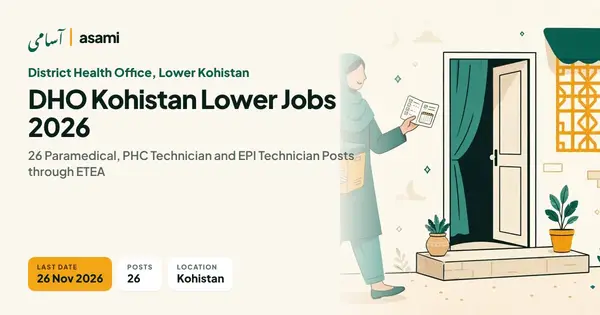
Paramedical technician (BPS-12): matric science plus a two-year diploma, or FSc Medical Technology. Lower Kohistan's district health office recruited 26.
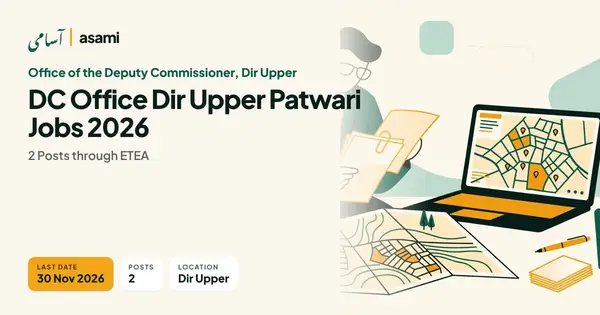
Patwari (BPS-09): intermediate plus a passed Patwar exam and registration with the District Collector.
Armed forces officer cadets: FSc (often pre-engineering or pre-medical with good marks) for academy entry.
DAE and diplomas count
Many advertisements treat a three-year Diploma of Associate Engineering (DAE) or a recognised paramedical diploma as the key qualification, not just the intermediate level. If you hold a DAE, sub-engineer posts in communication and works, local government and public health engineering are your main target, and they appear regularly in BPSC, PPSC-adjacent and departmental advertisements. Paramedical diploma holders from the KP Medical Faculty or recognised faculties are hired by district health offices and teaching hospitals. Match your exact diploma to each post: a CT Pharmacy post needs a pharmacy technology diploma, not a radiology one.
Skills that make the difference
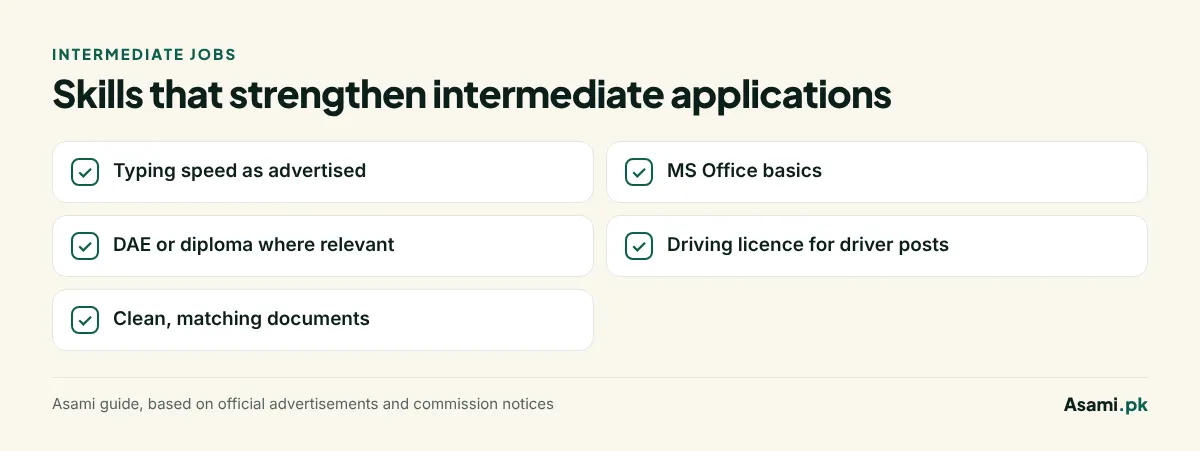
At this level, practical skills often decide eligibility. Typing speed is tested for clerical posts, so practise until you're well above the stated speed, in both English and Urdu where required. Shorthand is a scarce skill, and courts in particular struggle to find good stenographers, so a few months of shorthand training can open several posts. Computer skills (MS Office, data entry, basic troubleshooting) are now expected almost everywhere.
Skills for intermediate-level posts.
Tests and preparation
Intermediate-level tests go a little beyond matric: more English grammar and comprehension, slightly harder maths, general knowledge and current affairs, plus subject questions for technical posts. Sub-engineer candidates should revise surveying, building materials, estimation and basic structural concepts. Technicians should review their diploma curriculum. Clerical and steno candidates should expect skill tests after the written paper. Testing agencies such as ETEA, NTS, PTS and OTS publish their general patterns, and each advertisement names the agency.
Planning your next step
Many intermediate-level employees go on to complete a bachelor's degree through private study or evening programmes, which makes them eligible for assistant and officer posts and for departmental promotion. If you're still studying, choosing the right intermediate group also matters: pre-engineering opens DAE and engineering paths and forces cadet entries, pre-medical opens paramedical and nursing routes, and commerce and computer science suit clerical, accounts and IT support posts.
Intermediate jobs in courts and offices
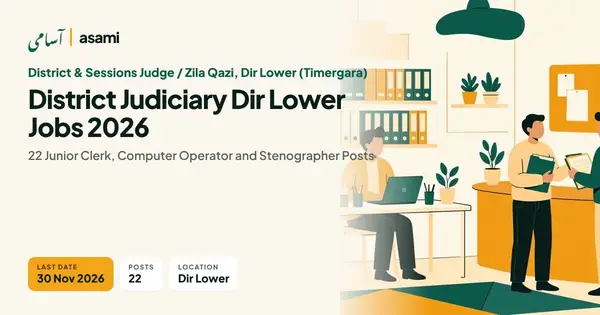
District and high courts are among the steadiest recruiters of intermediate holders, hiring junior clerks, stenographers and computer-literate staff in most recruitment cycles. In 2026, district courts in Upper Chitral and Dir Lower and the Peshawar High Court together advertised dozens of such posts. Court jobs are usually district-domicile restricted (except high courts, which recruit province-wide), involve steady office hours, and reward accuracy and discretion. Typing and shorthand tests are standard, and interviews check reliability.
Government offices and departments recruit similar clerical staff, often through ETEA, NTS or district recruitment committees, so watch both court and departmental advertisements in your district.
Common mistakes intermediate applicants make
The most frequent errors at this level are applying for a technical post with the wrong diploma specialisation, overstating typing or shorthand speed and failing the skill test, applying to a district post from outside the district, and missing the age cut-off date, which is sometimes a fixed date like 1 January rather than the closing date. A careful read of each advertisement's row avoids all four.
Finding intermediate jobs on Asami
This page lists every verified open government job that accepts intermediate or a DAE or paramedical diploma, with each job page explaining skill tests, domicile and the application route. For a personalised list, enter your details in Jobs for Me, which checks age, qualification and domicile rules for every open post.
Frequently asked questions
Do intermediate holders need typing for clerk jobs?
Usually yes. Junior clerk posts commonly require around 30 wpm typing, tested practically, and stenotypist posts also require shorthand.
Can I become a sub-engineer with a DAE?
Yes. Sub-engineer posts in works, local government and public health engineering departments typically require a three-year DAE in civil (or electrical or mechanical) technology.
Which government jobs can I get after intermediate?
Junior clerk, stenotypist, sub-engineer (with DAE), paramedical technician (with a diploma or FSc Medical Technology), patwari, and armed forces officer cadet entries.
Is a DAE equal to intermediate for government jobs?
Many advertisements accept a three-year DAE for technical posts like sub-engineer. Check each post's wording.
What typing speed is needed for junior clerk?
Usually around 30 words per minute, and higher for stenotypist posts, which also need shorthand.
Do intermediate jobs have a test?
Yes. Most have a written test through a testing agency, plus typing, shorthand or practical tests where relevant.
Where can I find intermediate base government jobs?
This page lists every verified open government job that accepts an intermediate qualification.