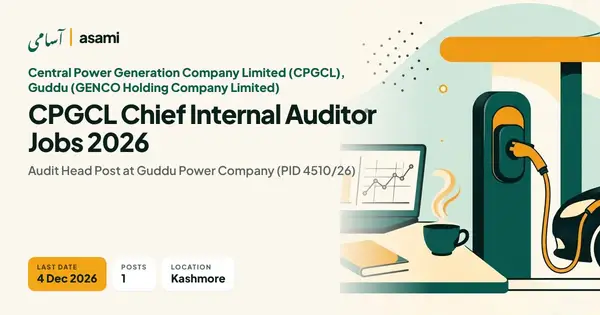
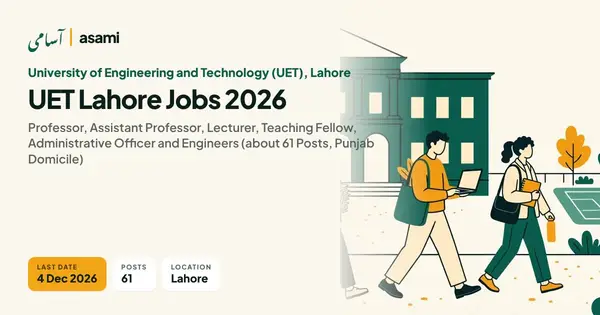
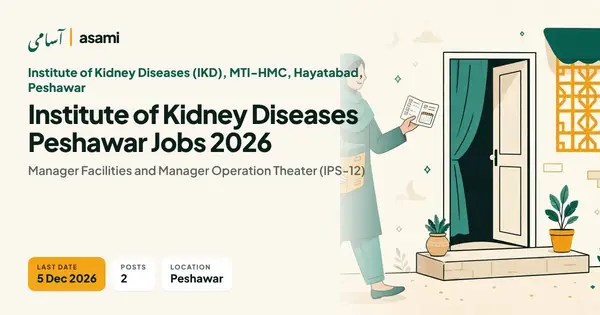
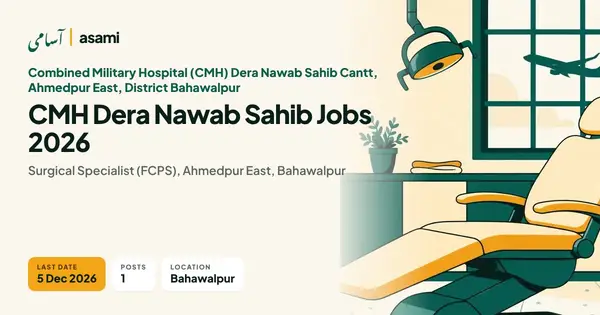
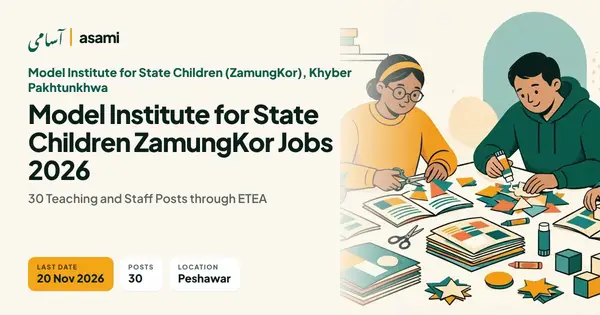
✓ Verified · Added 21 Nov · Source: Public Sector Organization of Government of Sindh through IBA Karachi (Sindh Information Department INF-KRY 5257/26) · 20 Nov 2026
11 days left7 Dec 2026
MCG
Ministry of Commerce, Government of Pakistan (Trade Facilitation Board)
✓ Verified · Added 19 Nov · Source: Rawalpindi Medical University · 19 Nov 2026
12 days left8 Dec 2026
SMH
Syed Muhammad Hussain Samli Hospital & Nawaz Sharif Cardiology Centre, Murree (Specialized Healthcare & Medical Education Department, Government of the Punjab)
✓ Verified · Added 24 Nov · Source: Military Lands & Cantonments Department, Ministry of Defence (Education Directorate advertisement) · 24 Nov 2026
New
13 days left9 Dec 2026
NSI
Nawaz Sharif Institute of Cancer Treatment & Research (NSICT&R), Lahore (Specialized Healthcare & Medical Education Department, Government of the Punjab)
✓ Verified · Added 10 Nov · Source: Balochistan Public Service Commission · 9 Oct 2026
Where a master's degree takes you in government
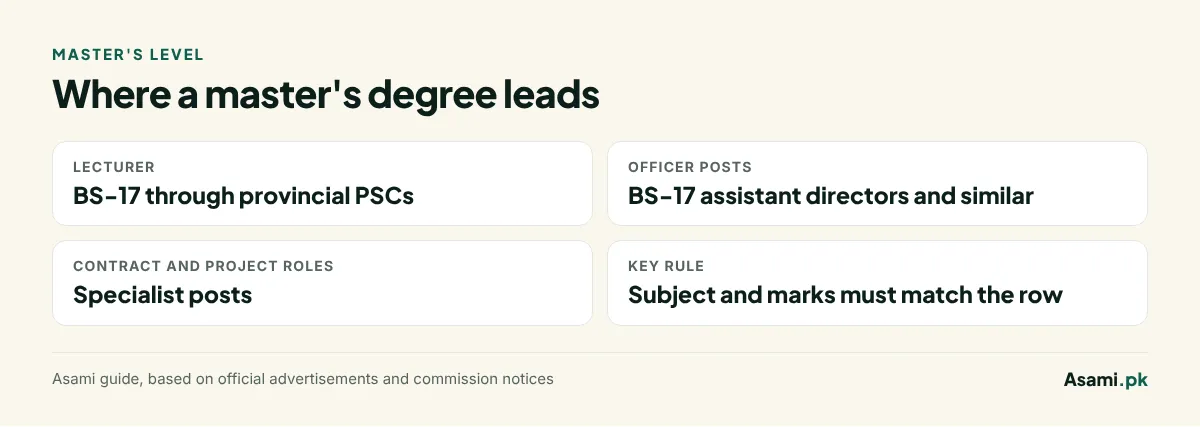
A master's degree, or any qualification amounting to 16 years of education, is the standard entry ticket for BS-17 officer posts across federal and provincial government. That covers lecturers in government colleges, assistant directors in departments and authorities, research and planning officers, economists, statisticians, chemists, geologists, HR and procurement officers, librarians, and many specialist roles in commissions' consolidated advertisements. FPSC's 2026 Advertisement 4 offered 160 Assistant Audit Officer seats to commerce, finance, economics, maths and statistics master's holders, and PPSC regularly advertises subject-wise lecturer posts that need a master's or BS (Hons) in the subject.
Because BS-17 is officer entry, these posts carry real responsibility from the start and lead to promotion through BS-18 and beyond. They also attract strong competition, so the subject of your master's and your marks matter.
Common routes for master's degree holders.
Matching your subject to the right posts
Subject decides much of your eligibility at this level. Some common matches:
Economics, statistics, mathematics: economists groups, planning and research officers, audit and statistics posts.
Commerce, finance, MBA: assistant audit officers, accounts and finance officers, procurement and HR roles, bank officer posts.
Chemistry, physics, biology, geology: lecturers, chemists for environmental and testing labs, geologists for dams and mining.
English, Urdu, Islamiyat, history and other humanities: lecturers, subject specialists and curriculum or training roles.
Computer science and IT (MSc/MCS): computer instructors, programmers, IT officers and database roles.
Library science, journalism, psychology: librarians, public relations officers, psychologists in institutions.
Marks, divisions and the '16 years' rule
Advertisements at this level often set academic thresholds: second division, first class for some economist posts, or a minimum percentage or CGPA. FPSC's Economists Group cases have asked for a first-class master's with no third division in the whole career. Read these conditions carefully, because they're applied strictly at scrutiny. Where advertisements say '16 years of education', a two-year master's after a two-year bachelor's qualifies, as does a four-year BS.
If your degree uses CGPA and the commission asks for percentage, use your university's official conversion. PPSC in particular asks for percentage marks at interview.
Lecturer posts: the biggest single opportunity
Government college lecturer posts (BS-17) are the most common job for master's holders, recruited by provincial commissions subject by subject. Selection usually includes a subject-heavy written test and an interview, with merit weighted towards academic record. Preparation should start from your master's syllabus, revising every core course from standard textbooks, with timed MCQ practice in the final weeks. Teaching aptitude and communication matter at interview, so prepare a short demonstration of how you'd explain a core concept to undergraduates.
Contract and project roles for master's holders
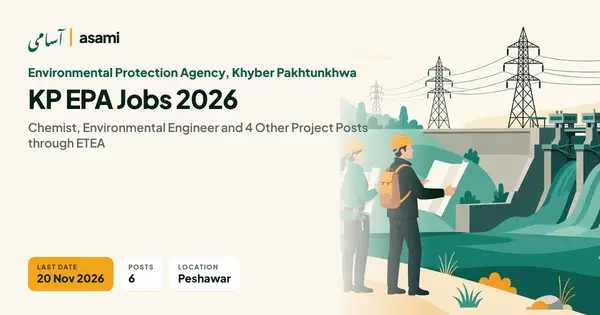
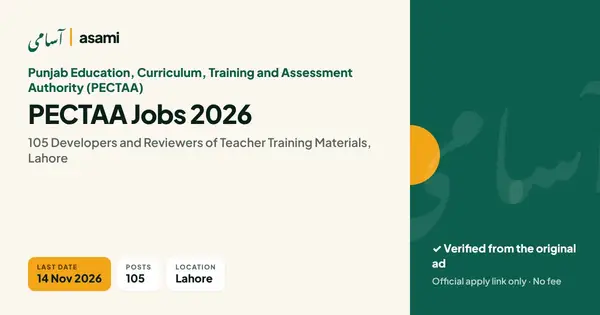
Beyond regular BS-17 posts, master's holders are in demand for contract and project positions: planning assistants and chemists on development projects (KP EPA's 2026 inventory project hired both), programme analysts, M&E specialists, curriculum developers (PECTAA's 2026 call needed a master's plus B.Ed and teaching experience) and authority specialists. These often add experience requirements and end with the project, but they can pay well and build specialised careers.
Preparing for officer-level tests
BS-17 tests typically combine a professional section in your subject with English, general ability, current affairs and Pakistan affairs. Start with your subject, which carries the most weight and where your degree gives you an edge, then build general ability with daily timed practice and newspaper reading. For commission posts, read Asami's FPSC and PPSC guides on schedules, results and past papers. Interviews at this level probe subject depth and how you'd apply it in the department, so learn the organisation's work before you go.
Common mistakes at the master's level
Master's holders most often lose out by applying for subject-specific posts with a related-but-different degree (an MSc in Environmental Science for a post that asks for chemistry, for example), by not meeting division or percentage thresholds stated in the post's row, and by applying to commission cases where their domicile has no seat. Another common error is assuming experience isn't needed: many specialist and project posts at this level add experience requirements that are verified at interview. Read every word of the post's row before paying a fee.
Finding master's-level jobs on Asami
This page lists every verified open government job that accepts a master's or 16 years of education, from commission officer cases to authority and project posts. Use Jobs for Me to filter by your field of study and domicile, and check the FPSC and PPSC pages for their latest consolidated advertisements, where most master's-level posts appear.
Frequently asked questions
Can I apply for FPSC Assistant Audit Officer with an MBA?
Yes, an MBA in finance or accounting was among the accepted qualifications in FPSC's 2026 advertisement, subject to age, domicile quota and other conditions in the case row.
Which government jobs can I get with a master's degree?
BS-17 posts such as lecturer, assistant director, research or planning officer, economist, chemist, geologist, audit officer, HR and procurement officer, and many specialist roles.
Is a master's equal to 16 years of education?
Yes. A two-year master's after a two-year bachelor's counts as 16 years, as does a four-year BS.
How do I become a government college lecturer?
Apply through your provincial public service commission's subject-wise lecturer advertisements, with a master's or BS (Hons) in the subject meeting the marks conditions.
Do master's jobs require a minimum division?
Often yes: commonly second division, and some posts, such as FPSC's economist cases, require first class.
Where can I find master base government jobs?
This page lists every verified open government job that accepts a master's qualification.